


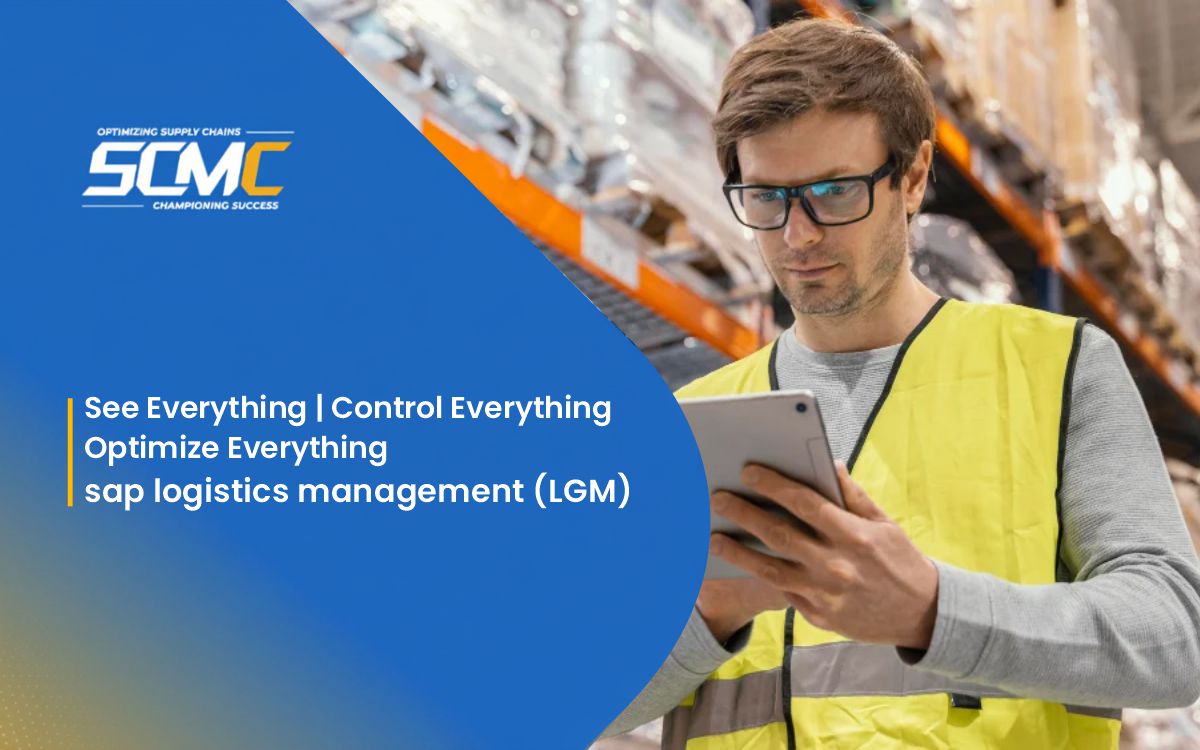
You stare at the dashboard, but the data is stale. The customer’s urgent call about a delayed shipment caught you completely off guard. Your warehouse reports high stock levels, yet production is halted waiting for the same materials. In today’s world, where customer patience is thin and disruptions are the norm, traditional, fragmented logistics systems are a liability, not a backbone.
This is the challenge SAP Logistics Management (LGM) is built to solve. It’s not just another software module; it’s a comprehensive, cloud-native suite designed to unify and intelligently orchestrate your entire supply chain network. In an era defined by volatility, SAP LGM matters because it transforms logistics from a cost center into a strategic engine for resilience, efficiency, and growth.
Why SAP Logistics Management is a Game Changer for Your Business
1.1 Real-Time Visibility Across the Supply Chain
Gain a single, unified view of your logistics operations from origin to destination. See the exact location and status of every shipment, inventory level across all warehouses, and warehouse task progress in real time. This end-to-end transparency allows for proactive exception management—you can address a delay before the customer calls. Empower your teams with data-driven decision making, moving from reactive firefighting to strategic control.
1.2 Enhanced Operational Efficiency
Drastically reduce time-consuming manual processes and the errors that come with them. Automate tasks from order creation to carrier selection and invoice reconciliation. Experience faster order fulfillment cycles through streamlined workflows and optimized processes. Intelligently allocate resources—be it warehouse labor, transportation capacity, or dock doors—maximizing throughput without increasing overhead.
1.3 Cost Optimization & Profitability
Directly lower operational costs through widespread automation and reduced manual intervention. Minimize inventory carrying costs by maintaining optimal stock levels based on real-time demand, not guesswork. Achieve better freight and transportation cost management by comparing carrier rates, optimizing loads, and selecting the most cost-effective routes and modes, turning logistics into a lever for profitability.
1.4 Improved Customer Satisfaction
Provide customers with accurate, reliable delivery predictions they can trust. Foster better communication and transparency with real-time tracking portals and proactive status updates. Enable faster, more informed responses to customer inquiries with all order and shipment data at your fingertips, building loyalty and enhancing your brand reputation.
1.5 Risk Mitigation & Compliance
Implement early warning systems that alert you to potential disruptions—weather events, port congestion, or carrier issues—allowing for contingency planning. Simplify regulatory compliance tracking for different regions and industries with built-in tools. Enhance security and full traceability for sensitive or high-value goods, ensuring integrity from start to finish.
Powerful Features That Drive Logistics Excellence
2.1 Transportation Management
Plan and execute multi-modal transportation (road, rail, sea, air) within a single platform. Simplify carrier selection and management with performance-based scoring. Automate freight cost calculation and audit with accuracy. Leverage advanced route optimization algorithms that consider cost, time, and carbon footprint.
2.2 Warehouse & Inventory Management
Track inventory in real-time across all storage locations. Automate warehouse operations with guided tasks for picking, packing, and putaway. Optimize stock levels using intelligent forecasting to avoid overstocking or stockouts. Streamline the flow of goods with integrated yard and dock management.
2.3 Order Management & Fulfillment
Process orders from all channels through an integrated system for consistency. Provide customers and internal teams with real-time order tracking and status updates. Automate exception handling workflows to resolve issues quickly. Calculate and promise reliable delivery dates based on real-time capacity and inventory.
2.4 Analytics & Reporting Dashboard
Monitor real-time KPIs like On-Time In-Full (OTIF) rates, transportation cost per unit, and warehouse productivity. Create customizable reports and visualizations tailored to different roles. Utilize predictive analytics to forecast demand and identify potential bottlenecks. Benchmark performance against industry standards.
2.5 Collaboration Hub
Seamlessly collaborate with partners, suppliers, and carriers in a shared digital space. Manage and share documents like bills of lading, certificates, and invoices electronically. Standardize communication workflows for orders, shipments, and exceptions. Set up event-based notifications to keep all stakeholders automatically informed.
2.6 Smart Automation & AI Capabilities
Employ machine learning for more accurate demand forecasting and inventory planning. Receive intelligent routing and carrier recommendations. Enable systems to suggest or even execute automated exception resolution for common issues. Design and deploy process automation workflows to eliminate repetitive tasks.
Logistics Management On-the-Go: Mobility That Empowers
3.1 Mobile-First Architecture
Access core functions through native mobile apps designed for usability. Enjoy a consistent experience across smartphones, tablets, and desktops. Enable workers to capture data and perform tasks even without connectivity, with automatic sync when back online.
3.2 Field Operations Enablement
Empower drivers and warehouse workers with intuitive apps for their daily tasks. Use built-in barcode and RFID scanning for speed and accuracy. Capture digital proof of delivery (POD) with signatures and photos. Transmit real-time status updates directly from the field.
3.3 Manager & Executive Mobile Views
Give decision-makers access to key mobile dashboards for a pulse on operations. Manage critical alerts and notifications from anywhere. Handle approval workflows for freight tenders or exceptions directly from a mobile device. Get quick access to critical metrics during meetings or while traveling.
3.4 Customer-Facing Mobile Capabilities
Offer customers a branded portal or app for real-time shipment tracking. Allow customers to schedule deliveries, modify preferences, or request returns. Provide direct in-app communication channels with your service team. Enable self-service options for booking, tracking, and invoicing.
Built to Connect: Integration That Just Works
4.1 SAP Ecosystem Integration
Works natively with SAP S/4HANA for a unified business process experience. Connects seamlessly with existing SAP ERP systems. Integrates with the SAP Business Network to connect with a vast ecosystem of partners. Offers deployment flexibility with cloud and on-premise compatibility.
4.2 Deep Integration with SAP Transportation Management (TM)
Experience seamless data flow between LGM and TM for end-to-order process continuity. Enable real-time transportation planning synchronization as orders are created. Manage freight orders from creation to settlement in a unified manner. Communicate with carriers from a single platform, reducing complexity. Gain consolidated transportation analytics and insights across modules. Automate freight cost settlement and payment processes. Trigger cross-module exception handling for holistic problem resolution. Maintain a single source of truth for all transportation data.
4.3 Powerful Integration with SAP Extended Warehouse Management (EWM)
Achieve unified visibility into all warehouse operations from a single pane of glass. Ensure real-time inventory synchronization between systems, eliminating discrepancies. Coordinate integrated inbound and outbound processes for smooth material flow. Automate the handoff from goods receipt to optimal putaway location. Align cross-docking and wave planning activities with overall logistics strategy. Integrate labor management for productivity tracking and planning. Synchronize yard management with warehouse schedules for efficient dock scheduling. Track warehouse task execution seamlessly from order to fulfillment. View consolidated warehouse performance metrics for holistic optimization.
4.4 Third-Party System Connectivity
Built on an API-first architecture for easy connection to any system. Utilize pre-built connectors for major e-commerce, marketplace, and legacy platforms. Support industry-standard EDI and protocols like EDIFACT or XML. Develop custom integrations for unique business needs.
4.5 IoT & Real-Time Data Integration
Ingest data from sensors, telematics, and connected devices for live monitoring. Integrate GPS and location tracking for real-time asset visibility. Monitor temperature, humidity, and other conditions for sensitive goods. Automate data capture from devices, removing manual logs.
4.6 Partner Ecosystem Integration
Connect directly to carrier and 3PL (Third-Party Logistics) systems for real-time rates and bookings. Integrate supplier portals for collaborative scheduling and ASNs (Advanced Shipping Notices). Connect with customer ERP or TMS systems for seamless order exchange. Link to marketplaces and digital platforms for streamlined drop-ship or fulfillment models.
Real Results: The Business Impact of Sap Logistics Management
5.1 Measurable ROI Metrics
Achieve significant cost reduction percentages in transportation, inventory, and administrative overhead. Document double-digit efficiency improvement statistics in order processing and warehouse throughput. Experience rapid time-to-value with modular, scalable implementation. Realize a typical payback period often measured in months, not years.
5.2 Operational Improvements
Substantially reduce lead times from order to delivery. Improve on-time delivery rates by 20% or more. Lower error rates in shipping, inventory, and invoicing to near zero. Enhance facility and asset throughput without capital investment.
5.3 Strategic Business Benefits
Gain a competitive advantage through superior supply chain agility and responsiveness. Build a scalable logistics foundation that supports rapid business growth and expansion. Enable innovation with a platform that adapts to new business models (e.g., direct-to-consumer, omnichannel). Dramatically improve market responsiveness to trends or disruptions.
5.4 Sustainability & ESG Impact
Measure and reduce carbon footprint through optimized routing and load consolidation. Enable sustainable logistics practices like mode shifting and network optimization. Simplify reporting for environmental compliance and regulations. Support circular economy initiatives through efficient reverse logistics.
5.5 Case Study Highlights
Businesses across industries report transformative results: A consumer goods company reduced transportation costs by 15% and improved delivery reliability by 25%. A manufacturer cut inventory levels by 30% while maintaining service levels. A retailer streamlined omnichannel fulfillment, reducing last-mile delivery times by 35%. The key lesson is clear: visibility and integration are the foundation of supply chain excellence.
Your Success is Our Priority: Comprehensive Services & Support
6.1 Implementation Services
Begin with a thorough assessment and a clear roadmap for your journey. Receive expert configuration and thoughtful customization to match your processes. Ensure a clean start with managed data migration and cleansing. Support your people with change management and role-based training.
6.2 Consulting & Advisory
Leverage best practice guidance from industry experts. Engage in process optimization workshops to redesign for efficiency. Access business transformation consulting to align logistics with corporate strategy. Utilize deep, industry-specific expertise tailored to your sector.
6.3 Training & Enablement
Roll out comprehensive user training programs for adoption. Develop administrator and power user training for system ownership. Offer certification opportunities for your team. Provide a library of self-paced learning resources for continuous development.
6.4 Ongoing Support & Maintenance
Rely on 24/7 technical support for mission-critical operations. Keep your system current with regular updates and patches. Utilize proactive performance monitoring and health checks. Engage in continuous improvement programs to evolve with your business.
6.5 Managed Services Options
Choose fully managed logistics operations to focus on your core business. Opt for co-managed service models where you retain control of strategy. Select from flexible engagement options that fit your needs. Operate with confidence under SLA-driven service delivery.
CONCLUSION
The future of logistics isn’t about faster trucks or bigger warehouses; it’s about intelligence, connectivity, and resilience. SAP Logistics Management delivers precisely that—a unified, intelligent command center for your entire supply network. It turns visibility into action, data into insight, and complexity into a competitive edge. By bridging the gaps between planning, execution, and collaboration, SAP LGM empowers you to not just meet the demands of the modern market, but to define them. The journey to supply chain excellence begins with a single, connected platform. Your future starts now.
SCM CHAMPS — Experts in SAP Logistics Management (LGM)
SCM CHAMPS helps organizations modernize and simplify their logistics operations through expertly delivered SAP Logistics Management (LGM) solutions. With more than seven years of dedicated experience in SAP supply chain implementations, we support businesses across industries in building resilient, transparent, and future-ready logistics ecosystems.
Our strength lies in combining strategic insight with hands-on execution. Having delivered numerous SAP logistics projects globally, our consultants understand both the technical depth of SAP platforms and the operational realities of warehouses, transportation networks, and fulfillment centers. This allows us to design solutions that are not only technically sound, but also practical and easy to adopt.
As an experienced SAP partner involved in early adoption initiatives, SCM CHAMPS brings firsthand knowledge of emerging SAP technologies, cloud transitions, and migration strategies. We apply this experience to help clients reduce risk, accelerate deployment, and maximize the value of their SAP Logistics Management investments.
From initial discovery and solution design to implementation, user enablement, and continuous optimization, we work closely with your teams at every stage. Each engagement is tailored to your business priorities, ensuring your logistics processes become more agile, cost-efficient, and performance-driven.
What sets SCM CHAMPS apart
- Deep specialization in SAP Logistics and Supply Chain Management
- Proven global delivery experience across multiple industries
- Practical, business-aligned solution design
- Expertise in SAP cloud adoption and system transitions
- End-to-end ownership from planning to post-implementation support
- Focus on measurable outcomes, not just system deployment
Business value you gain
- Greater visibility and control across logistics operations
- Improved process efficiency and reduced operational complexity
- Higher inventory accuracy and fewer execution errors
- Faster order processing and improved customer service levels
- Scalable solutions that grow with your business
SCM CHAMPS doesn’t just implement SAP LGM — we help you unlock its full business potential.