SCM Champs implements SAP Extended Warehouse Management for mid sized manufacturing,3PL & distribution companies in the US and India. Our work covers the full lifecycle warehouse assessment, deployment architecture, configuration, automation integration, cutover & post-go-live support.
SAP EWM projects succeed or fail on decisions made early: embedded or decentralized deployment, how much of the legacy process to carry forward and whether warehouse automation sits inside EWM or outside it.SCM Champs works through those decisions with your operations team before configuration begins.
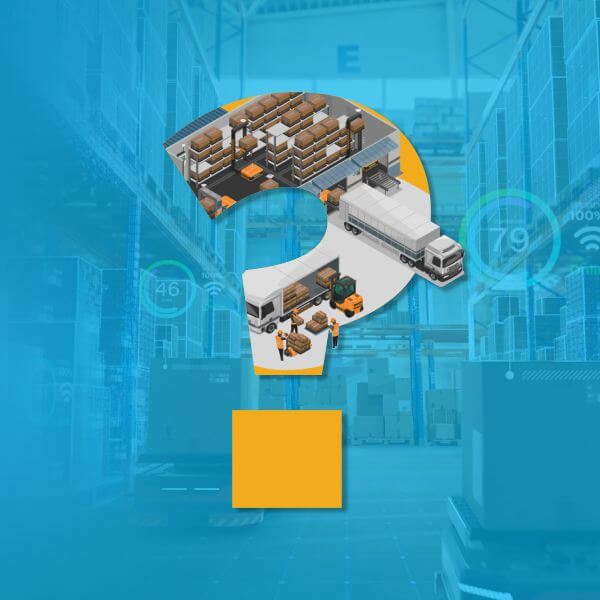
SAP EWM is SAP warehouse management system for high volume, process-intensive warehouses.It manages operations at the level of individual warehouse tasks each physical movement is assigned to a resource, tracked to completion, and recorded against the handling unit involved.
This is what separates EWM from legacy SAP WM. WM recorded stock quantities against storage bins.EWM directs the work itself it controls the sequence of movements,manages the equipment performing them and handles exceptions on the floor as they occur.
The deployment model you choose affects cost, resilience, and upgrade path for the life of the system.
Benefits :

EWM routes movements using storage control. Process-Oriented Storage Control (POSC) splits a movement into a defined sequence — unload, deconsolidate, inspect, putaway — with each step as a separate warehouse task assigned to a different resource group. Layout-Oriented Storage Control (LOSC) routes movements through intermediate bins based on physical layout,such as a conveyor handover point. Warehouse Order Creation Rules then bundle those tasks into work packages sized for the operator & the equipment.SCM Champs designs this logic during blueprinting because storage control decisions are difficult & expensive to change once a warehouse is live.

SAP EWM covers inbound, internal, outbound, and resource management in a single system.Main Features:
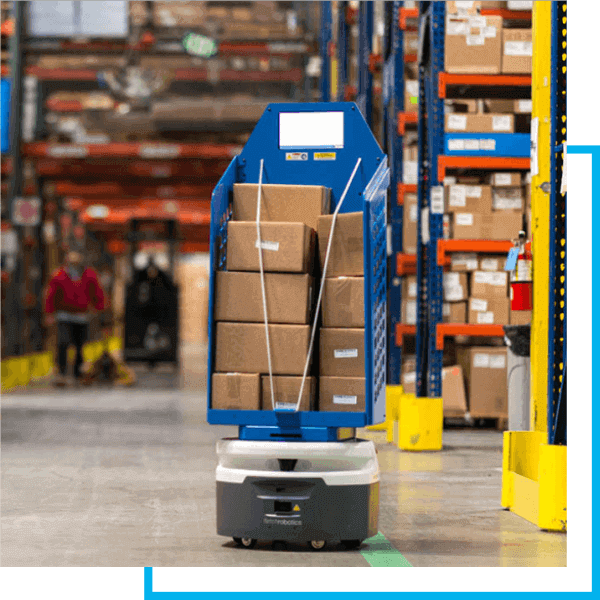
SAP EWM includes the Material Flow System, which exchanges telegrams directly with the PLCs controlling conveyors, sorters, and automated storage and retrieval systems. For autonomous mobile robots and automated guided vehicles, integration runs through the vendor fleet management system, connected either through MFS or a BTP-based interface, depending on the protocols the vendor supports.
SCM Champs designs and implements these integrations AMR/AGV fleet connections,AS/RS interfaces and MFS configuration so automation and SAP warehouse operations work as one system.

SCM Champs focuses on SAP Supply Chain Execution rather than the full SAP portfolio,which means EWM, TM, Yard Logistics & Business Network for Logistics are the systems our consultants work in daily.We deliver from offices in Wilmington, Delaware and Noida, India, which allows US-hours project management with a delivery team that can sustain longer configuration and testing cycles.SCM Champs has delivered multiple SAP EWM projects for manufacturing, 3PL & distribution clients, supported by SAP EWM certified consultants.
SCM Champs delivers SAP EWM across the full project lifecycle and afterwards as managed support. Engagements typically begin with a warehouse assessment that produces a deployment recommendation and a scoped implementation plan.
Assessment covers physical layout, throughput volumes, SKU profile, existing automation, interface landscape, and master data quality the four factors that most often move an EWM project from six months to twelve.


SCM Champs places SAP EWM consultants with client project teams on a contract basis, without long-term commitment.This suits organizations running EWM internally that need specific expertise for a defined phase:blueprinting,MFS configuration, RF development or cutover support.
Our consultants work inside your project structure and your methodology rather than imposing a separate delivery model. Handover documentation is produced as part of the engagement so your internal team retains the knowledge after the contract ends.
Typical placements cover EWM functional configuration, ABAP development in the EWM stack, MFS and automation interface work, and testing or cutover management.Placements typically range from a few weeks for targeted support to several months for full-phase engagements.
SCM Champs is an official SAP Partner. Our consultants hold SAP EWM & S/4HANA certifications.Partner status matters mainly for access to SAP support channels,early release information and enablement resources that feed directly into project delivery.
For contract logistics and 3PL environments, EWM supports multi-owner stock, client-specific process variants & activity-based billing.These are configuration capabilities, not custom development and most standard implementations never turn them on.
SCM Champs supports third-party logistics operators on multi-tenant EWM setups, including storage allocation across clients and integration with non-SAP ERP systems on the client side.


Organisations still running SAP WM face a decision with a clear deadline. SAP has set an end date for mainstream maintenance of SAP WM, and the practical options are migration to embedded EWM, migration to decentralized EWM, or a move to Stock Room Management where warehouse processes are genuinely simple.
Stock Room Management deserves more attention than it usually gets. It is SAP's simplified successor to WM for basic warehouse bin management without task-level direction, labour management, or automation control. For a warehouse that only needs to know where stock sits, it is a lower cost destination than EWM. SCM Champs assesses this option honestly rather than defaulting every client to a full EWM project.
The conversion approach is the next decision. A brownfield system conversion moves the existing ERP to S/4HANA and activates EWM afterwards, preserving historical data and existing configuration context. It is faster, but it carries forward accumulated process debt. A greenfield implementation builds EWM fresh with redesigned processes slower and more expensive but it removes legacy workarounds. Greenfield is usually correct where WM carried heavy custom development or where the warehouse layout has changed substantially since the original go-live.
Custom code is where most WM migrations go wrong.EWM standard functionality covers a large share of what was historically built as custom development in WM: storage control, wave management, labour tracking, and task routing are standard in EWM and were frequently custom in WM.The correct approach is a custom code assessment during the discover phase, classifying each object as covered by EWM standard, rebuilt as a BTP extension, or retired. Porting WM custom code into EWM produces a system that is expensive to maintain and difficult to upgrade.
Technically, the migration involves mapping WM storage types and sections to EWM storage types, sections, and bin structures; defining availability groups to map EWM stock to ERP storage locations; rebuilding putaway and removal strategies as POSC or LOSC storage control; recreating warehouse order creation rules & migrating or rebuilding packaging specifications.RF screens do not carry over WM RF transactions must be redesigned in the EWM RF framework.
Cutover is the highest-risk phase. Open transfer orders, in-progress deliveries, and partially picked orders all need a handling decision before the switch. Most migrations include a wall-to-wall physical inventory count during the cutover window, which means the warehouse stops.Planning that window around production and customer commitments is usually the constraint that sets the go-live date, not the technical readiness of the system.
Migration duration depends on scope & site complexity. A single-site embedded EWM migration typically runs 4–6 months. A site with automation adds 2–3 months for MFS configuration and interface testing. A multi-site rollout usually takes 6–9 months per site, depending on sequencing & how much process standardisation is required across locations.
A single-site SAP EWM implementation typically runs six to twelve months. The phases below reflect how SCM Champs scopes projects; the spread between six and twelve months is driven by automation scope, interface count, data quality, and business user availability during blueprinting.
Implementation phases:

SCM Champs has delivered SAP EWM implementation projects for manufacturing, 3PL, and distribution companies across different warehouse environments.
If you are considering implementing SAP EWM, we encourage you to contact SCM Champs Inc. to learn more about our services and how we can help you achieve success.
SAP EWM helps complex warehouses improve inventory accuracy, picking efficiency, task management & real time visibility.It supports advanced picking strategies, slotting, wave management, labor management & yard management in one system. It can handle high volume operations, multiple warehouse zones & value added services. Real-time stock and task visibility helps reduce errors, delays, and manual work. It also supports businesses managing multiple warehouses or complex supply chains.
SAP EWM implementation cost depends on the warehouse and project requirements. Key factors include:
The timeline for SAP EWM implementation depends on the warehouse complexity, number of sites, integrations, customization, data readiness, testing, and training requirements.A typical implementation may follow these stages:
1 .
2 .
3 .
4 .
5 .
6 .
7 .
he biggest SAP EWM implementation challenges and risks include:
1 .
2 .
3 .
4 .
SAP EWM integrates with SAP S/4HANA, SAP TM, and warehouse automation through these main areas:
Choosing the right SAP EWM implementation partner involves evaluating:
Preparing your warehouse for SAP EWM implementation involves several important steps:
Cutover & Support : Creating a clear cutover plan and post-go-live support plan to ensure a smoother transition.By preparing data, processes, users, and testing requirements in advance, organizations can improve SAP EWM go-live readiness and reduce operational disruptions.
Please fill out the form below and we will contact you shortly.