


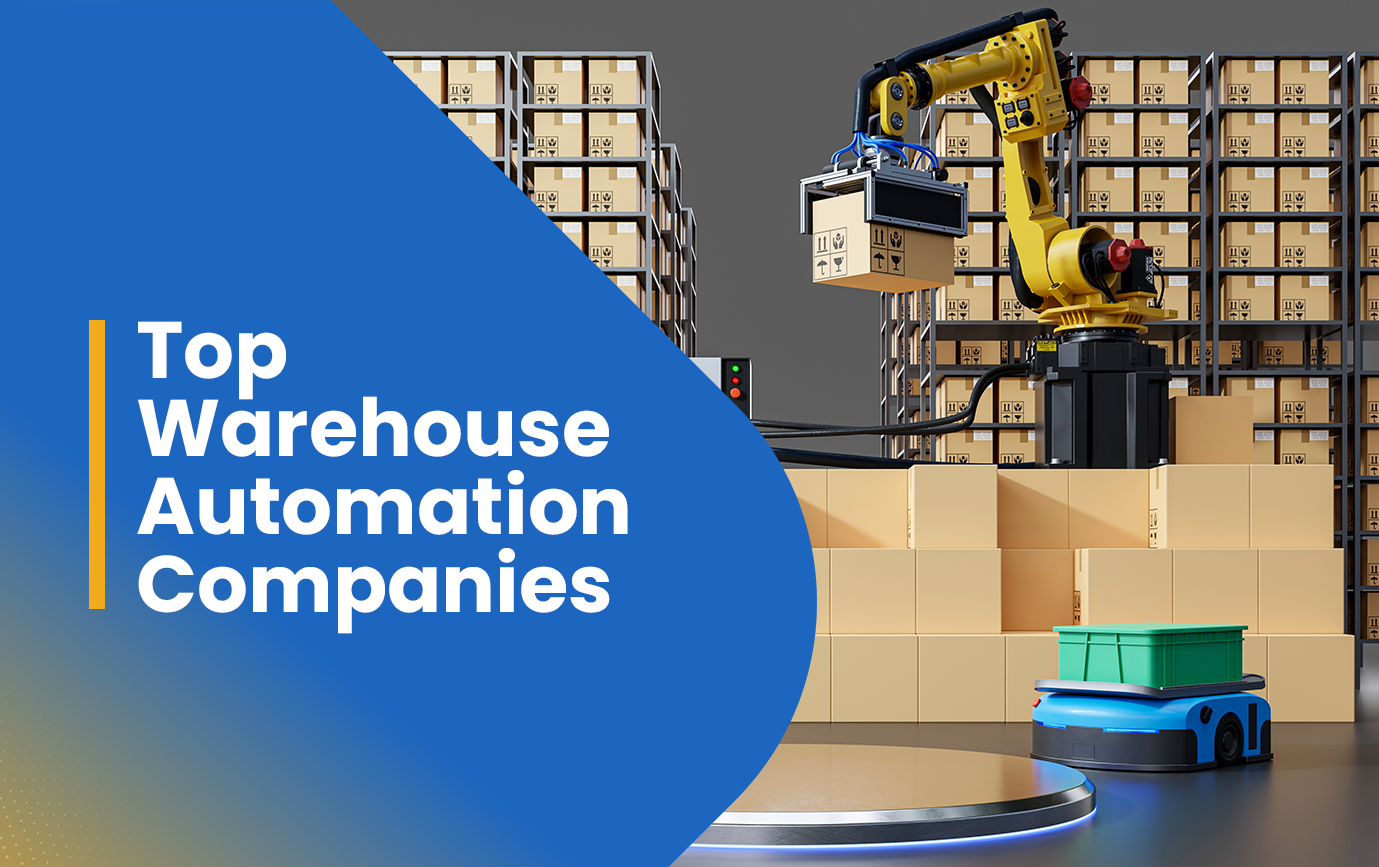
Warehouse automation integration is no longer a future concept it’s happening right now, across industries, at every scale. And if your automation equipment isn’t connected to a live warehouse management system, you’re leaving serious operational value on the table.
Warehouses today are under pressure like never before. Customers want their orders fast — sometimes the same day. Operations teams can’t afford mistakes. And hiring good workers? That’s a whole other battle that gets harder every year.
At some point, every warehouse leader faces the same choice keep throwing people at the problem, or find a smarter way to run the floor. Most companies that choose the smarter route end up looking at robotics, automated guided vehicles, storage and retrieval systems, and conveyor setups.
But here’s the thing the hardware is only half the story. If those machines aren’t talking to your warehouse management system in real time, you’ve just spent a lot of money building expensive islands that don’t work together. That’s the gap SAP Extended Warehouse Management fills. This article breaks down how the integration actually works, why it matters, what technologies are involved, a real project example, and what to look for in a partner.
What Does Warehouse Automation Integration Actually Mean?
Simply put it means your physical equipment and your warehouse software are having a live, two-way conversation at all times.
In a traditional setup, workers scan pallets, key in data, and manually update the system after every move. In an integrated setup, the machines handle all of that on their own. The moment something moves, the system knows. The moment the system decides something needs to move, the machine gets its instructions.
In the SAP world, SAP EWM sits at the center of all of this. It acts like the brain of the operation — coordinating automated guided vehicles, autonomous mobile robots, storage systems, conveyors, and picking robots all at once. It takes a business event — say, a new picking order — and breaks it down into machine instructions. When the machine finishes, it reports back, and EWM updates inventory automatically.
No manual entry. No lag. No one calling across the floor to ask what just happened.
Without this kind of tight connection, your automation equipment runs on its own logic, completely separate from your WMS. And your WMS has no idea what’s actually happening out on the floor. That’s a problem that gets worse as you scale.
Why Are Companies Moving So Fast on This?
Walk into almost any warehouse operation today and you’ll hear the same frustrations. They just show up in different forms depending on the industry.
- Picking and putaway errors that drive up returns and frustrate customers — even a 1% mistake rate quietly eats away at margins when you’re running high volumes.
- Workers walking miles every shift just to find inventory, or standing around waiting for a forklift — that’s time and money wasted every single day.
- Inventory counts that don’t match what’s actually in the bin — leading to stockouts, overstock, and last-minute scrambles to replenish.
- Heavy reliance on labor that makes scaling up for peak season both painful and expensive.
- No real-time visibility into what’s happening on the floor — managers running on gut feel instead of live data.
When you connect automation to SAP EWM, you start solving all of these problems together. The system catches mistakes before they spread. Robots and people get assigned work based on live priorities. And every movement gets recorded instantly, so your inventory numbers actually mean something.
Companies aren’t doing this because it’s trendy. They’re doing it because the numbers justify it.
Role of SAP EWM in Warehouse Automation
SAP EWM doesn’t just track inventory. In an automated warehouse, it becomes the central command center — coordinating people, machines, and processes as one unified operation.
The component that makes this possible is called the SAP Material Flow System.
MFS is built directly into EWM and handles communication with the physical control systems on the floor — conveyor PLCs, AGV fleet managers, and more. There’s no separate middleware box. EWM talks directly to the equipment.
Here’s what that looks like in practice. EWM sends a transport request — “take this handling unit from conveyor A and move it to storage bin B.” MFS converts that into machine language and sends it over. When the machine finishes, it confirms back, and EWM immediately books the inventory movement.
Beyond moving things around, EWM also handles task interleaving for robots and mobile units.
An AMR gets sent to bring a rack to a picking station. While it’s on the way, EWM already assigns a pick task to the operator waiting there. Once picking is done, the AMR gets its next instruction automatically. No one coordinates this manually — it just happens.
Inventory updates in real time, the moment a move is completed — not at end of shift, not after a batch run.
If an ASRS crane drops a pallet into a rack position, EWM updates the stock record before the crane is even back at its starting point. That level of precision eliminates the lag that causes overselling, mis-picks, and unnecessary safety stock.
The result is a floor where people, machines, and processes all move as one system.
Technologies Used in Warehouse Automation Integration
AGV Integration AGVs follow fixed routes guided by magnetic tape, wires, or lasers. EWM sends transport orders through MFS to the AGV fleet controller. The AGV completes the move, reports back, and EWM triggers the next step automatically.
AMR Integration AMRs navigate freely without fixed paths. EWM sends mission requests based on live order priorities and the AMR picks the best route on its own. The system handles traffic, charging, and shared picking zones automatically.
ASRS Integration Crane-based, shuttle-based, or cube storage systems require very precise communication at high speed. EWM directs every store and retrieve operation down to the exact bin location through MFS or web services. Inventory updates the moment a move is confirmed.
Conveyor Integration EWM tracks every decision point along the conveyor line — every divert, merge, and scan point. MFS sends routing instructions to PLCs, receives barcode reads back, and keeps handling unit status current so cartons keep moving without interruption.
Robotics Integration Picking robots and palletizers connect to EWM through work queues. EWM tells the robot what to pick, where it goes, and in what quantity. The robot confirms completion and flags exceptions — enabling fully automated order windows when needed.
Real Warehouse Automation Integration Use Case
The Starting Point
The site was running entirely on manual reach trucks and paper-based picking. Getting a pallet from receiving into reserve storage took up to four hours. Operators had to hunt for putaway locations, scan every pallet by hand, and radio supervisors whenever something didn’t match up. Inventory accuracy was around 91%, which meant the pick face regularly ran out of stock. Every peak season brought a wave of overtime costs — and orders still ran a day behind.
What Was Built
A fleet of counterbalance AGVs was brought in for pallet movement. A shuttle-based ASRS was installed for fast-moving small parts. Both were connected directly to the existing SAP EWM system.
SAP MFS was configured to manage live communication with the AGV fleet controller. A certified interface was built to connect EWM to the ASRS vendor’s own control system. RFID portals went up at every receiving dock, so pallet tags were read automatically the second a truck unloaded.
EWM generated transport tasks and pushed them through MFS to an available AGV, routing each pallet to quality inspection or straight to an ASRS induction point. The ASRS handled putaway and retrieval, with EWM updating stock continuously in the background. A supervisor cockpit was also configured showing every active automation task in real time.
What Changed
- Putaway time from dock to storage dropped by over 40%
- Picking accuracy reached 99.6%
- Inventory accuracy stabilized at 99.3%
- Overall throughput increased 35%
- Peak season temporary labor cut in half
The management team went from running on outdated reports to watching a live dashboard showing every robot, every order, and every exception in one place.
How SCM Champs Supports Warehouse Automation Integration
SCM Champs doesn’t just configure software and hand it over. The focus is on building integration architectures that hold up in real operations — not just in a demo environment.
The work starts by understanding how the warehouse actually runs, not just what the project scope says. After walking through enough facilities, you learn quickly that floor diagrams never capture the full story of how work really moves.
The team brings deep SAP EWM experience across greenfield builds and complex migrations, combined with hands-on knowledge of automation connectivity. That means handling the full scope — mapping processes to EWM, designing the MFS communication layer, configuring device and PLC interfaces, and testing every handshake between material flow and inventory posting.
Coverage includes all major robotics and ASRS vendors, so clients aren’t stuck with proprietary middleware that becomes a maintenance headache down the road. The end result is a scalable foundation that your internal team can actually operate and grow with over time.
Why Choose SCM Champs for SAP Warehouse Automation Integration
- Deep SAP EWM and MFS expertise — not surface-level WMS knowledge
- Hands-on experience with AGV, AMR, ASRS, conveyor, and robotic arm integrations
- Full project ownership from process design through go-live and hypercare support
- Solutions built for manufacturing, retail, and third-party logistics environments
- Success measured in real KPIs — throughput, accuracy, and labor efficiency
- Architectures designed to scale as your automation footprint grows
Conclusion
Warehouse automation has moved well past the experimental stage.
For most operations competing on speed and cost, it’s no longer optional. The technology on your floor is only as good as the system connecting it all together.
SAP EWM is what turns a collection of individual machines into one operation that thinks and responds in real time. With the right integration, your warehouse catches problems before they happen, adjusts to demand automatically, and gives your team the visibility to make fast, confident decisions.
The difference between a smart warehouse and an expensive one comes down to how well everything is connected.
When SAP EWM, MFS, and your automation layer work together, the whole operation runs cleaner — fewer errors, faster throughput, less wasted effort. Whether you’re still evaluating the concept or already deep in planning, the team you choose matters a great deal.
You need people who understand both the supply chain side and the technical side — and who’ve actually built these systems before. That’s what SCM Champs brings to the table, and it’s what turns an automation investment into a real, lasting operational advantage.