


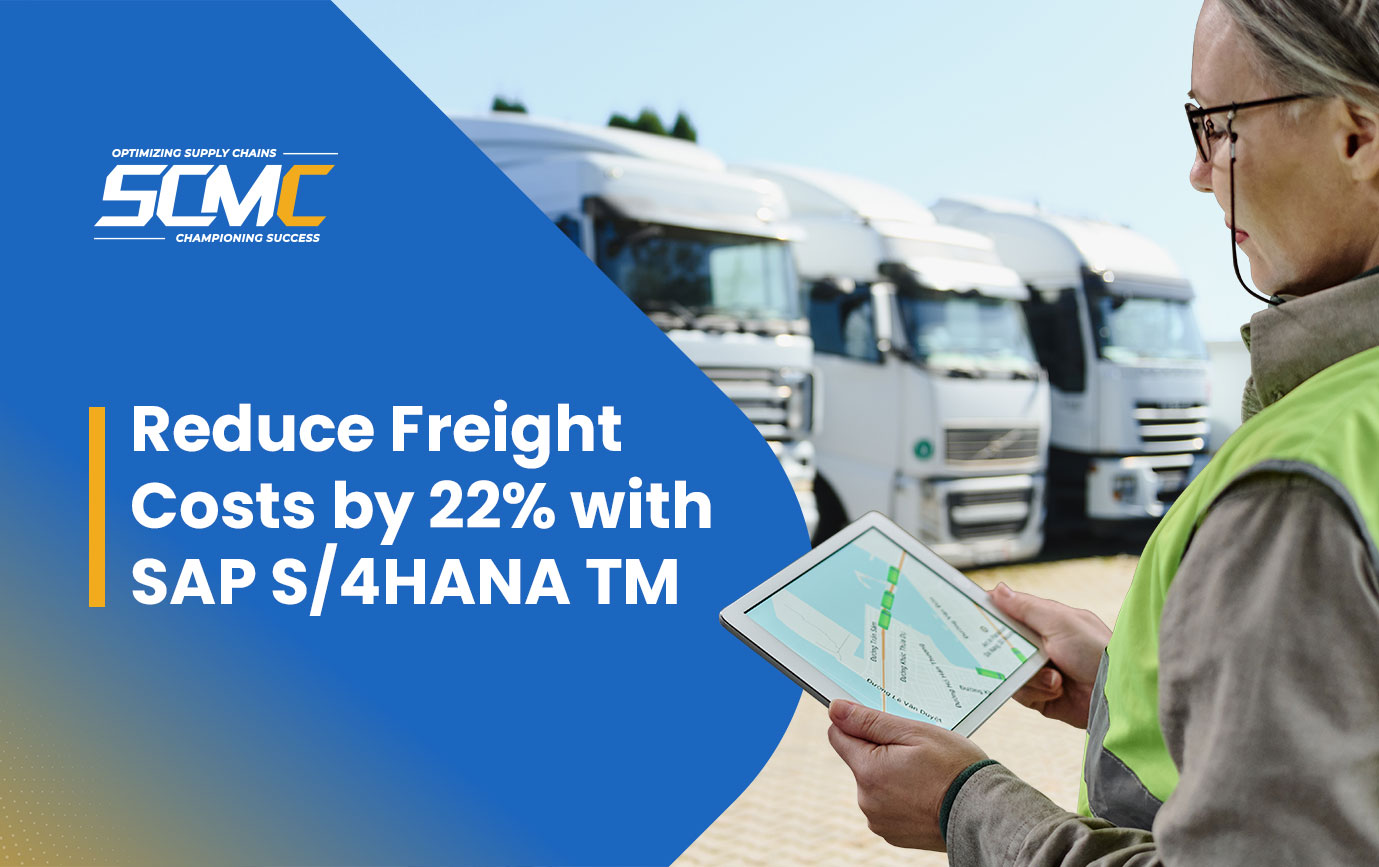
The Freight Problem No One Talks About—Until It Hits the Numbers
Every quarter, the same report lands on the CFO’s desk. Logistics costs are up again not slightly, but enough to impact margins.
The logistics head already knows the reasons. Fuel costs increased. Carriers raised rates. A few urgent shipments went out at premium pricing because planning ran out of time.
But knowing the reason doesn’t fix the problem.
Most companies are still planning goods the same way they did years ago with spreadsheets, emails and phone calls. The planner will spend two to three days developing a shipment plan that will be obsolete by the end of the week. One delay, one change or one rejected carrier and the whole plan goes down the drain.
This is no small leak. It is an ongoing cost loss.
The CSCMP State of Logistics Report in 2025 stated that U.S. logistics are projected to be $2.58 trillion, or 8.8% of GDP. And in manufacturing, a Xeneta survey from 2026 found that 94% of companies exceeded their freight budgets, by an average of 10%.
The real question isn’t whether freight costs will go up.
So, the real question is, “Is your planning process controlling costs or quietly increasing them?”
Freight Is No Longer Just a Cost — It’s a Business Strategy
Freight used to be treated as a routine expense. Negotiate once a year, accept rate increases, and move on.
That approach no longer works.
Logistics costs are now always higher than pre-pandemic levels. Freight rates are erratic and volatile. Take container costs, for example. In October 2023, a 40-foot container cost $1,342. A year later, that same container was running north of $5,900 — a nearly 340% spike in freight rates.
Even once they’ve stabilised, the rates are still significantly higher than they were.
Now multiply this across:
- Multiple warehouses
- Multiple carriers
- Hundreds of shipments
- Different regions and regulations
Manual planning simply cannot keep up.
When carrier selection is based on habit instead of data, when load consolidation happens in someone’s head, and when actual costs are only known after invoices arrive, the business is not managing freight.
It is absorbing inefficiency.
That’s why 77% of Chief Supply Chain Officers now rank freight cost as their top challenge.
What SAP S/4HANA TM Freight Optimisation Really Means
In essence, it lets you schedule your shipments at the lowest cost possible.
The system instead of manual decisions based on:
- Selects the best carrier
- Optimizes routes
- Combines shipments efficiently
- Calculates real costs in advance
For example:
Instead of a planner choosing a carrier based on the requirements, the system automatically selects the lowest cost option that still meets delivery timelines.
The result:
- Lower cost
- Faster planning
- Better visibility
No guesswork. No manual dependency.
The Daily Challenges Logistics Teams Face
These are the exact problems we hear from logistics leaders:
- “We don’t know why freight costs keep increasing.”
- “Planning takes 2–3 days every week in Excel.”
- “We don’t have real-time shipment visibility.”
- “We may be overpaying carriers, but we can’t prove it.”
- “Each warehouse works differently — no single view.”
- “As we grow, planning becomes more chaotic.”
All of this points to one issue:
Freight planning has not evolved with the business.
And when planning stays manual, every new shipment adds more complexity — and more cost.
Who Should Consider SAP TM Freight Optimisation?
This is not for every company. It is for businesses where logistics is becoming a major cost driver.
You should consider it if:
- You operate multiple warehouses or distribution centres
- Logistics cost is rising above 8–10% of product cost
- Planning is still manual (Excel, email, calls)
- You already use SAP S/4HANA
- You manage multiple carriers without clear comparison
- Delivery commitments are becoming harder to meet
If 2–3 of these apply, there is already cost leakage.
Manual Planning vs SAP TM — The Real Difference
| Factor | Manual Planning | SAP S/4HANA TM |
| Cost Control | Reactive | Real-time optimised |
| Planning Time | 2–3 days | Few hours |
| Carrier Selection | Habit-based | Data-driven |
| Load Optimisation | Inconsistent | Automated |
| Visibility | Limited | Real-time |
| Scalability | Breaks under pressure | Scales easily |
| Delivery Performance | Unpredictable | Consistent |
| Business Impact | Higher cost, more errors | Lower cost, better control |
This is not a small improvement.
It is a completely different way of working.
Real Case Study — 22% Freight Cost Reduction
Client Profile
- Industry: Industrial Manufacturing
- Region: USA
- Revenue: ~$180M
- Freight Orders: 400+ per month
Before SCM CHAMPS
- Planning fully manual
- 2.5 days per cycle
- Freight cost increasing (18% YoY)
- Trucks underutilised
- Carrier selection based on relationships
- On time delivery: 78%
- Invoice reconciliation: manual and time-consuming
What SCM CHAMPS Implemented
- Centralised freight planning in SAP TM
- Automated carrier selection based on cost + performance
- Load consolidation rules to maximise truck utilisation
- Real time dashboards for cost and delivery tracking
- Integration with SAP EWM and SAP SD
Results (Within 6 Months)
| Metric | Before | After |
| Freight Cost | 100% | ↓ 22% |
| Planning Time | 2.5 days | < 4 hours |
| On-Time Delivery | 78% | 94% |
| Visibility | Limited | Full real-time |
| Invoice Process | Manual | Automated |
The cost savings alone paid back the investment in under 9 months.
How SCM CHAMPS Delivers These Results
We follow a simple 3-step approach:
1. Assess
- Identify where money is leaking
- Review the planning process
- Analyze carrier usage and rates
- Find integration gaps
2. Configure
- Set up SAP TM based on real business needs
- Automate carrier selection
- Define routes and load rules
- Enable automated tendering
3. Optimize
- Automate repeat scenarios
- Track KPIs (cost, delivery, performance)
- Integrate with SAP EWM, SD, FI
- Continuously improve performance
What Results You Can Expect
Based on real implementations:
- 18–25% reduction in freight cost
- 60–70% reduction in planning time
- 90–95% on-time delivery
- Full visibility across operations
- ROI within 9–12 months
The Cost of Doing Nothing
Delaying this decision has a cost.
- Freight costs will keep rising
- Manual planning will keep breaking
- Customer expectations will keep increasing
Meanwhile, competitors who automate now will:
- Operate at a lower cost
- Deliver faster
- Scale without chaos
The gap will only grow.
Take the First Step
If you want to reduce freight cost and remove manual planning, SCM CHAMPS can help.
We specialise in SAP S/4HANA TM implementations for manufacturers and distributors, with a clear focus on measurable results.
Get Started:
- Book a free consultation
- Get a freight cost assessment
- See a live demo
No generic pitch. Just a practical discussion about your current challenges and opportunities