


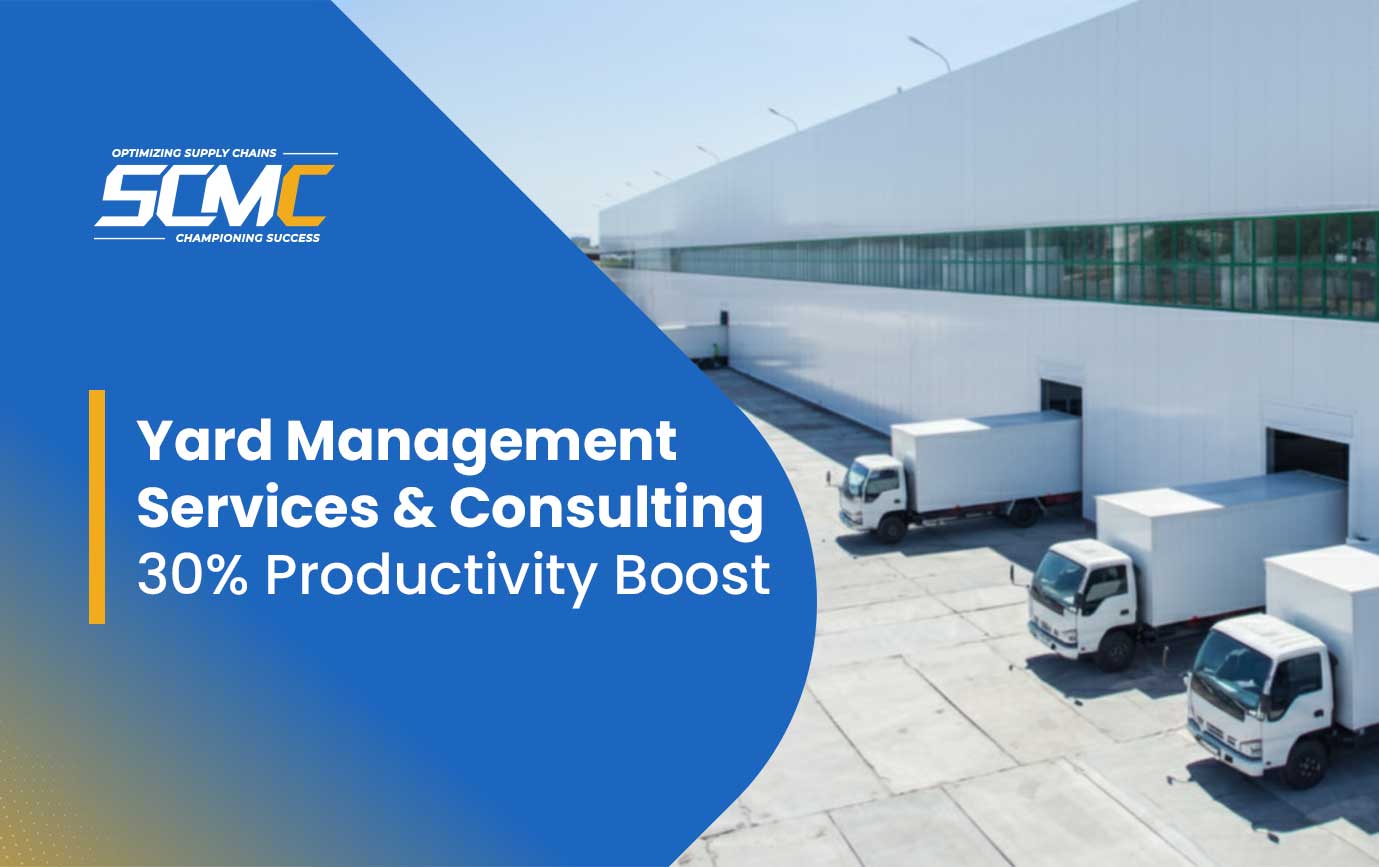
In today’s high-stakes US supply chain environment, competitive advantage is no longer created only inside warehouses or transportation networks. Increasingly, it is won—or lost—in the yard, the physical and digital interface between inbound transportation, warehouse execution, and outbound fulfillment.
For many enterprises, yard operations remain one of the least optimized and least visible parts of the supply chain. Manual tracking, reactive decision-making, gate congestion, and excessive dwell time quietly erode margins and service levels. What was once considered an operational detail has become a strategic control point with direct financial impact.
This is where AI-powered yard management services fundamentally change the equation moving yard execution from reactive coordination to predictive, intelligence-driven orchestration.
What Are AI-Driven Yard Management Services?
Traditional yard management services focus primarily on visibility and task execution. AI-driven yard management services extend this foundation by applying predictive analytics, machine learning, and optimization logic to continuously improve decisions and outcomes.
At an enterprise level, AI-powered yard management services include:
-
Real-time and predictive tracking of trailers, containers, and yard assets
-
AI-orchestrated gate check-in, appointment validation, and prioritization
-
Predictive dock scheduling and congestion forecasting
-
Intelligent sequencing of yard moves based on risk, cost, and service impact
-
Automated detection and escalation of exceptions
-
Tight integration with ERP, WMS, and TMS platforms
The objective is not automation for its own sake, but earlier decisions, fewer surprises, and faster throughput an approach increasingly adopted by enterprise supply chain leaders working with specialists such as SCM CHAMPS.
Why Yard Inefficiencies Are a Strategic Risk for US Enterprises
In large US supply chains, yard inefficiencies rarely appear as a single failure. Instead, they accumulate across labor overruns, carrier charges, missed SLAs, and lost throughput—until they become a material business risk.
Common enterprise-level challenges include:
-
High variability in trailer dwell times with no predictive insight
-
Detention and demurrage treated as unavoidable operating expenses
-
Yard labor dispatched manually rather than dynamically prioritized
-
Gate congestion increasing safety risk and driver dissatisfaction
-
Poor synchronization between transportation schedules and warehouse capacity
-
Inability to forecast congestion during peak seasons or disruptions
Organizations that continue to manage yards reactively often struggle to scale efficiently—particularly during periods of volume volatility.
How AI-Powered Yard Management Services Deliver Measurable Business Value
Executives invest in AI when it produces repeatable, auditable outcomes, not abstract analytics.
1. Predictive Reduction in Yard Dwell Time
AI models analyze historical dwell patterns, appointment adherence, dock performance, and real-time yard conditions to identify trailers at risk of delay.
In typical enterprise pilots, organizations see 25–50% dwell-time reduction, depending on yard size and complexity. In one recent 90-day pilot delivered by SCM CHAMPS, proactive reprioritization reduced dwell time by 42% before congestion formed.
2. Detention and Demurrage Cost Avoidance
By flagging high-risk trailers hours or days in advance, operations teams can intervene early. Large multi-dock sites often realize six- or seven-figure annual savings, particularly where detention had previously been considered unavoidable.
3. Increased Throughput Without Physical Expansion
AI dynamically balances gate flow, dock capacity, and yard moves in real time—unlocking latent capacity without adding labor or expanding the yard footprint.
4. Optimized Asset Utilization
Machine-learning models continuously improve trailer positioning and rotation logic, reducing idle assets, rental trailers, and unnecessary repositioning moves.
5. Labor Productivity Through Intelligent Orchestration
Rather than manual dispatching, AI sequences tasks based on priority, distance, and downstream impact—reducing empty moves and improving productivity per yard jockey.
Core Capabilities of Advanced AI-Enabled Yard Management Services
Intelligent Yard Visibility
-
Digital yard twin with real-time and predictive status
-
Trailer risk scoring based on dwell probability
-
Automated detection of anomalies and delays
AI-Driven Gate Automation
-
Predictive arrival pattern analysis
-
Computer-vision support for check-in where deployed
-
Automated routing of exceptions to supervisors
Smart Dock and Appointment Optimization
-
AI-based slot allocation using historical and live data
-
Dynamic reallocation during labor shortages or disruptions
-
Improved dock utilization and reduced idle time
Predictive Yard Move Optimization
-
Machine-learning-driven task prioritization
-
Optimization algorithms to minimize non-value-added moves
-
Real-time route optimization for yard drivers
Executive Analytics and Decision Dashboards
-
Predictive KPIs and trend forecasting
-
Cost-avoidance and ROI attribution
-
Scenario analysis for peak and disruption planning
These capabilities form the foundation of the AI-driven yard solutions implemented by SCM CHAMPS for complex US enterprise environments.
Integration: The Backbone of Intelligent Yard Operations
AI is only effective when it operates inside the enterprise ecosystem.
Modern yard management services—such as those delivered by SCM CHAMPS—support API-driven, event-based integration with:
-
ERP systems: SAP ECC & S/4HANA, Oracle EBS
-
WMS platforms: Blue Yonder, Manhattan, SAP EWM
-
TMS solutions: TMW, Oracle OTM, FourKites, project44
-
Edge & IoT: RFID, telematics, gate cameras, access control
Typical integration models include cloud-to-cloud APIs, secure middleware, or hybrid deployments for on-prem environments. Data latency is measured in seconds, enabling near-real-time decisioning.
Industry Use Cases Enhanced by AI
Manufacturing
-
Predictive inbound prioritization for raw materials
-
Reduced production line interruptions
-
Synchronization between yard flow and production schedules
Retail & Distribution
-
Peak-season congestion forecasting
-
Faster inbound processing and cross-dock execution
-
Improved OTIF performance
Food & Beverage / Cold Chain
-
Time- and shelf-life-aware prioritization
-
Reduced spoilage and compliance risk
-
Exception alerts aligned to food safety thresholds
3PL & Logistics Providers
-
AI optimization across multi-client yards
-
Improved SLA performance
-
Scalable operations without linear cost growth
The AI-First Yard Management Approach
AI should not be treated as an add-on, but as a decision layer embedded into yard execution.
This AI-first philosophy—followed by SCM CHAMPS—is built on:
-
Models trained on real operational supply-chain data
-
A combination of supervised learning, predictive analytics, and optimization algorithms
-
Explainable AI outputs that supervisors trust
-
Modular deployment—visibility first, autonomy over time
The focus remains on human-augmented decision-making, not black-box automation.
Implementation Timeline: Designed for Speed and Control
A typical enterprise rollout used by SCM CHAMPS in US deployments—follows a controlled, phased approach:
-
Operational & Data Readiness Assessment (1–2 weeks)
-
Integration & AI Model Configuration (2–3 weeks)
-
Pilot / Proof of Value (30–60 days)
-
Scaled Deployment and Workforce Enablement
-
Continuous Optimization and KPI Expansion
Final Thoughts: Choosing an AI-Driven Yard Management Partner
When evaluating yard management services, enterprises should look beyond basic YMS features and ask:
-
Is AI predictive and explainable?
-
Can it integrate cleanly into enterprise systems?
-
Are results measurable and defensible?
-
Will frontline teams actually adopt it?
Organizations that successfully answer these questions often partner with specialists like SCM CHAMPS to reduce risk and accelerate value realization.
Ready to Build an Intelligent Yard?
If your organization is ready to move beyond reactive yard operations and unlock AI-driven efficiency, the next step is a focused assessment or pilot program.
SCM CHAMPS helps US enterprises design, pilot, and scale AI-powered yard management services with measurable business outcomes.
Request an AI-powered yard assessment today.